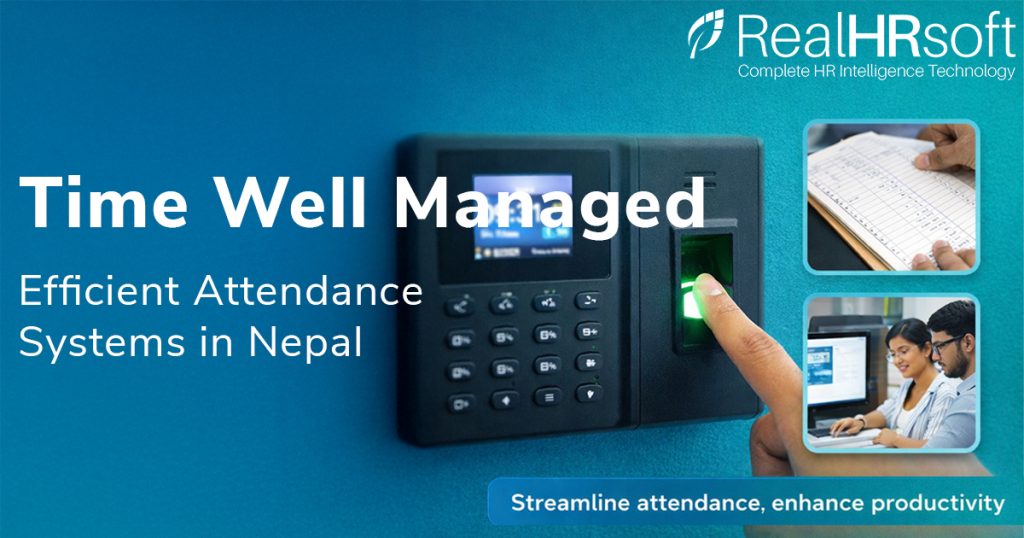
Exploring methods and technologies for accurate, transparent, and hassle-free attendance tracking.
Managing employee attendance is fundamental to productivity, discipline, and accurate payroll. However, many Nepali organizations, especially SMEs still rely on outdated systems prone to errors, manipulation, and administrative burden.
This blog explores modern attendance technologies, practical implementation steps, and what HR teams in Nepal should prioritize while upgrading their systems.
Why Efficient Attendance Management Matters
A well-designed attendance system helps HR in multiple ways:
- Accurate payroll processing: Reduces disputes and manual errors by ensuring every hour worked is correctly recorded.
- Transparency and fairness: Builds trust among employees when attendance data is accurate and tamper-proof.
- Compliance with Nepali labor laws: Proper records protect organizations during audits and prevent penalties.
- Better productivity insights: Helps managers track late arrivals, overtime, and absenteeism to improve workforce planning.
- Reduced administrative workload: HR teams can focus on strategic initiatives rather than manual tracking.
In a digital HR landscape, the right attendance tools directly contribute to better workforce management.
Common Attendance Tracking Methods in Nepal
Nepali organizations use a mix of traditional and modern systems. Here’s a detailed look:
A. Manual Registers (Outdated but common)
- Method: Paper-based logs or Excel sheets.
- Challenges: Time consuming, prone to manipulation, error-prone, and difficult for audits.
- Explanation: While low cost, these methods fail to provide real time insights or reliable records, making them unsuitable for growing organizations.
B. Punch Cards
- Method: Mechanical timecards.
- Challenges: High maintenance, no real-time data, susceptible to “buddy punching.”
- Explanation: Employees can clock in for one another, causing attendance inaccuracies and payroll errors.
C. Biometric Devices
- Method: Fingerprint, facial recognition, retina scan.
- Benefits: Highly accurate, prevents proxy attendance, integrates with payroll and HRIS.
Challenges: Upfront cost and dependency on stable electricity/network. - Explanation: Biometric systems ensure attendance integrity and reduce administrative work over time.
D. RFID / ID Card Scanning
- Method: Employees tap cards on a device.
- Benefits: Quick and easy.
- Challenges: Cards can be shared among employees.
- Explanation: Suitable for mid-sized organizations, but less secure than biometric or mobile-based systems.
E. Mobile App-Based Attendance
- Method: GPS, geofencing, and selfie verification.
- Benefits: Ideal for remote/hybrid workers, real-time syncing, cost-effective.
- Challenges: Relies on mobile phones and internet access.
- Explanation: Perfect for field teams and SMEs with flexible work locations.
F. Cloud-Based HRIS Attendance
- Method: Integrated attendance, leave, and payroll in one system.
- Benefits: Live dashboards, automated reports, seamless payroll processing, multi-location management.
- Challenges: Requires onboarding and training.
- Explanation: Ideal for growing enterprises looking for comprehensive attendance insights and integration with HR functions.
Key Features to Look for in a Modern Attendance System
When upgrading, ensure your system includes:
- Real-time syncing: Updates attendance instantly for accurate payroll.
- Leave + attendance integration: Prevents manual leave tracking errors.
Overtime and shift management: Tracks extra hours and shift changes automatically. - Automated reporting: Generates analytics and compliance reports quickly.
- Mobile attendance options: Supports remote or field teams.
- Role-based access: Managers can view relevant data without breaching privacy.
- Alerts for late arrivals, missing punches, and overtime: Helps managers act proactively.
- Seamless payroll integration: Reduces administrative burden and errors.
These features streamline HR operations and enhance accuracy throughout the employee lifecycle.
Steps to Implement an Efficient Attendance System
Step 1: Identify Needs
- Assess employee count, locations, and field or shift requirements.
- Ensures the chosen system fits operational requirements.
Step 2: Choose the Right Tool
- Decide between biometric, mobile, or hybrid systems.
- Prefer tools that integrate with payroll and HRIS.
Step 3: Set Clear Policies
- Define punch-in/punch-out rules, grace periods, overtime, and remote attendance guidelines.
- Transparent policies reduce disputes and ensure compliance.
Step 4: Train Employees and Managers
- Conduct onboarding sessions, share SOPs, and provide quick guides.
- Training ensures smooth adoption and minimal resistance.
Step 5: Monitor and Optimize
- Analyze attendance trends, adjust policies, and ensure compliance.
- Regular reviews maintain system effectiveness.
Final Thoughts
Accurate attendance management is the backbone of effective HR operations.With Nepal moving toward digital HR transformation, upgrading to efficient attendance systems isn’t just a technological improvement, it’s a strategic investment in productivity, compliance, and organizational growth.
If you want to implement a modern attendance solution, set up policies, or explore HRIS-based tracking systems, reach out today to schedule a consultation.
Our team will help you select, implement, and optimize the right attendance system tailored to your organization’s needs, ensuring seamless tracking, accurate payroll, and enhanced workforce productivity.
Don’t let outdated systems slow your growth, take the first step toward smarter attendance management now!
Reach out to us for expert advice and support: 📧 info@aayulogic.com 📞 +977-9802-075555